Insurance Documentation Support in Hollywood, FL
A water damage claim succeeds or fails on evidence. Insurance documentation is the disciplined record of your loss: dated photographs, moisture meter readings, a sketch of every affected area, and a day-by-day log of the drying work. When your adjuster asks what happened, where the water went, and what was done about it, this file answers with measurements instead of memory.
Understanding Insurance Documentation Support in Hollywood
Adjusters evaluate three things: that the loss was sudden and accidental, the full extent of what got wet, and that the response was reasonable and complete. Homeowners usually have photos of the worst of it but nothing showing moisture inside wall cavities, under flooring, or the drying progress over the following days. Without readings and logs, the conversation becomes your recollection against their skepticism — and coverage decisions follow the paperwork, not the story.
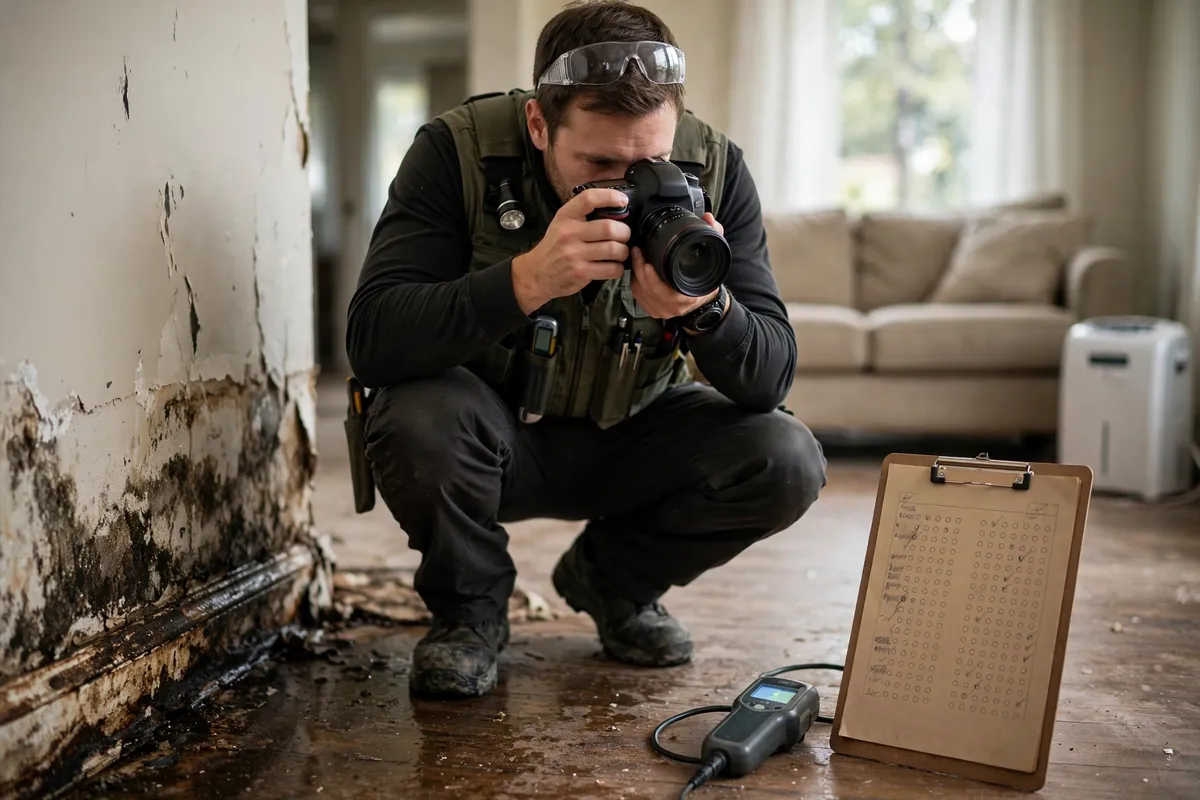
Good documentation captures the loss at its worst and tracks it to resolution. That means moisture readings taken on a grid across affected materials, photographs with dates, a list of materials removed or dried in place, equipment placement notes, and daily monitoring entries until everything verifies dry. In Hollywood's humid climate, where drying takes active management, this paper trail also proves the work was necessary rather than excessive.
How We Handle the Job
Documentation starts at the first visit: wide and close-up photographs of every affected room, moisture readings recorded material by material, and a simple sketch marking wet boundaries. As drying proceeds, readings are logged each day alongside equipment changes, so the file shows a clear curve from wet to dry. Anything removed — saturated drywall, pad, insulation — is photographed in place first, then listed. The finished package is organized so you can hand it directly to your adjuster or keep it with your records.
We explain what each piece of the file shows and why it matters, in plain language. If the loss involves active cleanup too, related work such as emergency water extraction, structural drying, or flood cleanup may be part of the same job, and each gets its own documented trail.
Local Response and Insurance Support
Searching for insurance documentation support near me usually means you need help without delay. We answer emergency calls around the clock. Documentation — photos and moisture readings — supports conversations with your insurance carrier when the loss is sudden and accidental. We do not decide coverage; we provide clear technical information about the work performed.
When to Call
Call if you have active water, wet materials that are not drying, odors after a leak, or a backup that may involve contaminated water. Early action in Hollywood’s climate is almost always less disruptive than waiting. For neighborhood-specific service, see our service areas. For the full list of capabilities, visit all services.
Frequently Asked Questions
What does an adjuster actually want to see?
Dated photos of the damage, moisture readings showing what was wet and how wet, a list of affected materials and rooms, and a log of the drying work with start and finish readings. Organized evidence like this makes their evaluation straightforward.
Can documentation help if my claim was questioned or denied?
It gives you concrete evidence to discuss with your carrier — readings and photos carry more weight than descriptions. We provide the file; coverage decisions always stay with your insurance company.
Do you send the documentation to my insurance company?
We prepare it for you to share with your adjuster. You're the policyholder, so the file goes to you first, complete and organized.
When should documentation begin?
Immediately. The first hours capture the loss at its worst, which is exactly what an adjuster needs to see. Waiting until after cleanup means the most important evidence is gone.